


When it comes to protecting your home from water damage, gutters play an important role. They collect rainwater from your roof and direct it away from your foundation, siding, and landscaping. But not all gutter systems are designed the same way.
Two of the most common options are half-round gutters and K-style gutters. While both serve the same purpose, they differ in appearance, water capacity, maintenance, and installation requirements.
If you're planning a gutter replacement or building a new home, understanding these differences can help you choose the right system for your exterior.
Half-round gutters have a smooth, curved shape that resembles a tube cut in half lengthwise. This traditional design has been used on homes for generations and is especially common on historic properties, older farmhouses, and homes with classic architectural details.
Unlike more angular gutter styles, half-round gutters have a rounded interior without sharp corners. Their simple shape creates a distinctive appearance that complements certain home styles.
One of the biggest advantages of half-round gutters is their appearance. Their rounded profile offers a traditional look that pairs well with historic homes, cottages, and farmhouse-style exteriors.
Other benefits include:
Half-round gutters typically cost more to install than standard K-style systems. Their mounting hardware and installation requirements can be more specialized, particularly on homes without a conventional vertical fascia board.
They also generally carry less water than K-style gutters of the same nominal width. Homes with large roof areas or significant rainfall may require larger gutters or additional downspouts to manage runoff effectively.
K-style gutters are among the most common gutter systems installed on residential homes today.
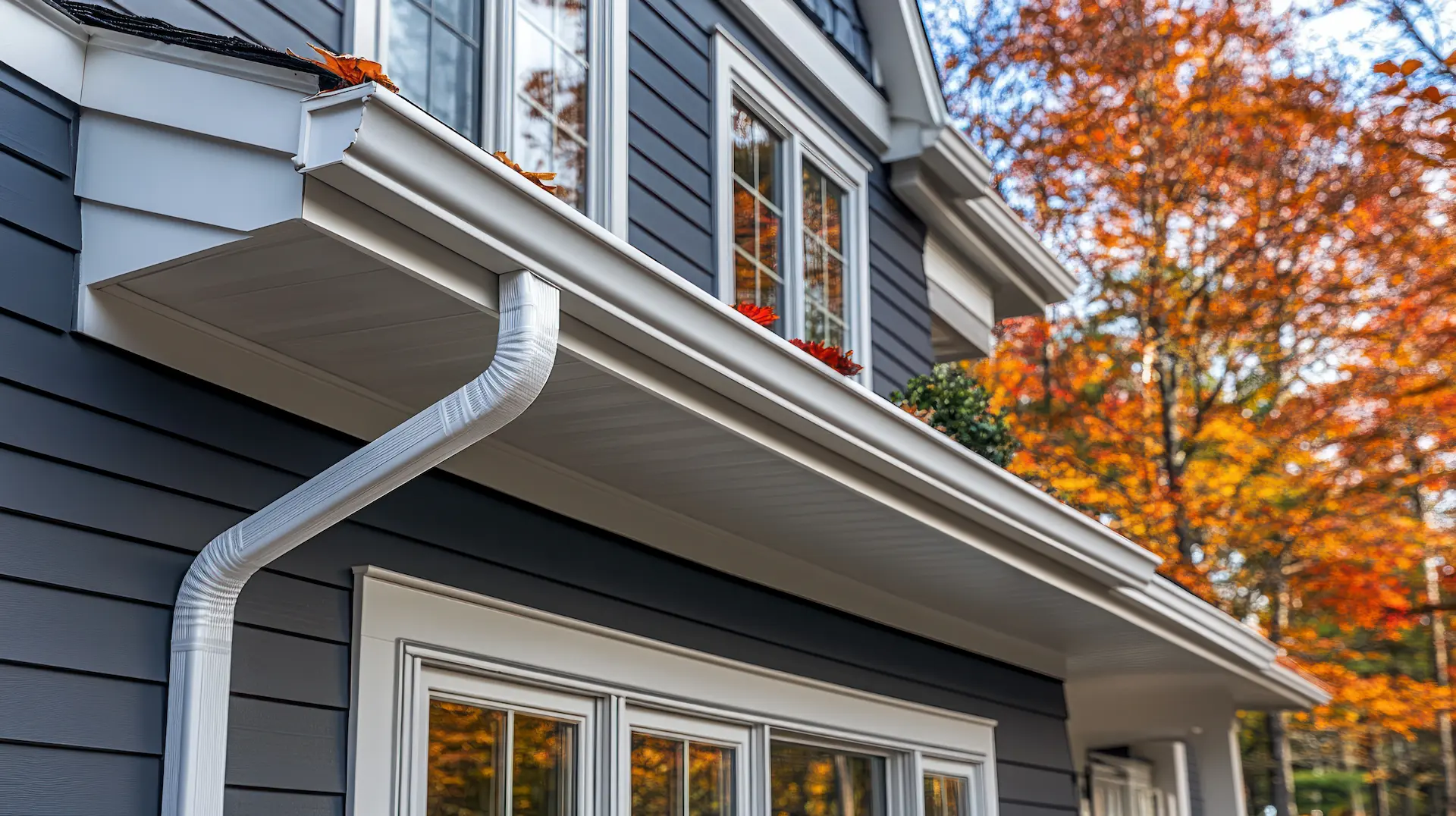
They feature a flat back that sits against the fascia board and a decorative front profile that resembles crown molding. Their shape gives them a more angular look than half-round gutters.
K-style gutters are popular because they combine practical performance with a design that works well on many modern and traditional homes.
K-style gutters are a common choice for residential gutter installations, offering homeowners a practical option that works well with many roofing and exterior designs.
Other advantages include:
K-style gutters are also available in several materials and colors, allowing homeowners to coordinate them with roofing, siding, and trim.
For many Ohio homes, K-style gutters provide a practical combination of affordability, appearance, and performance.
K-style gutters' interior corners can collect leaves, dirt, and other debris. Without regular cleaning, buildup can cause clogs and overflow.
Like any gutter system, K-style gutters also require proper installation and maintenance to prevent sagging, leaks, and drainage problems.
Regardless of which gutter style you choose, gutter downspouts are essential to the system's performance.
Downspouts carry collected rainwater from the gutters to the ground, where it can be directed away from your home's foundation.
Even properly sized gutters can overflow if downspouts are too small, poorly positioned, or clogged.
When planning a gutter installation, consider:
The goal is to create a complete drainage system rather than simply selecting an attractive gutter profile.
Homeowners across Northeast Ohio deal with plenty of changing weather throughout the year. Heavy spring rain, falling leaves in autumn, and winter snow and ice can all put additional demands on a home's gutter system.
Both half-round and K-style gutters can perform well in these conditions when properly sized, installed, and maintained.
K-style gutters are often a practical choice for newer homes and residential properties throughout the area, particularly when affordability and water capacity are priorities.
Half-round gutters may be a better fit for older farmhouses, historic homes, and traditional properties commonly found throughout Wayne, Holmes, and surrounding Ohio counties.
Ultimately, the right choice depends on your home's roof design, drainage needs, architectural style, and budget. A properly installed gutter system will help protect your home through Northeast Ohio's changing seasons.
Choosing between half-round and K-style gutters involves more than picking the shape that looks best. Water capacity, maintenance needs, installation costs, and downspout placement all affect your gutter system's performance.
At Kidron Custom Exteriors, we understand how proper drainage protects your home's roof, siding, and foundation. Whether you're replacing aging gutters or updating your exterior, selecting the right system can help prevent water damage and maintain your home's appearance.
Ready to improve your home’s gutter system? Kidron Custom Exteriors serves homeowners across Northeast Ohio. Request your free gutter estimate today.